

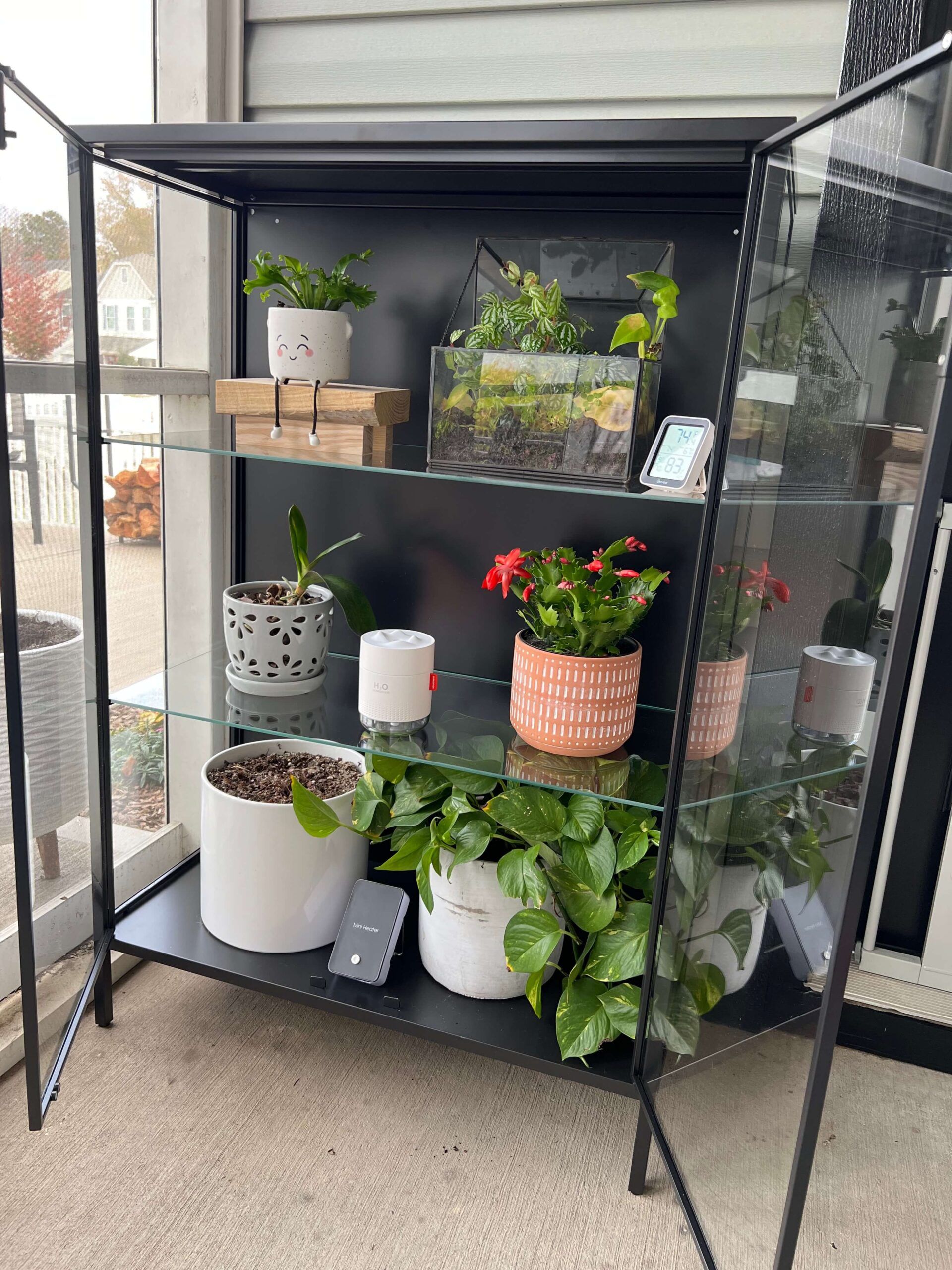

If you love plants but don’t have the space—or budget—for a full-size greenhouse, this IKEA RUDSTA greenhouse might be the perfect solution. That is why we transformed the glass IKEA RUDSTA cabinet into a compact greenhouse for our patio to help protect our plants when temperatures start to drop.
With a few simple additions, including a small heater, humidifier, thermometer and grow light, we were able to turn this already beautiful glass cabinet into a functional little greenhouse. It’s compact, easy to access and doesn’t require building an entire greenhouse from scratch.
I’m sharing exactly how we set up our IKEA RUDSTA greenhouse, everything we used, how we control the temperature and humidity, and what we’ve learned from actually using it.
What Is an IKEA RUDSTA Greenhouse?
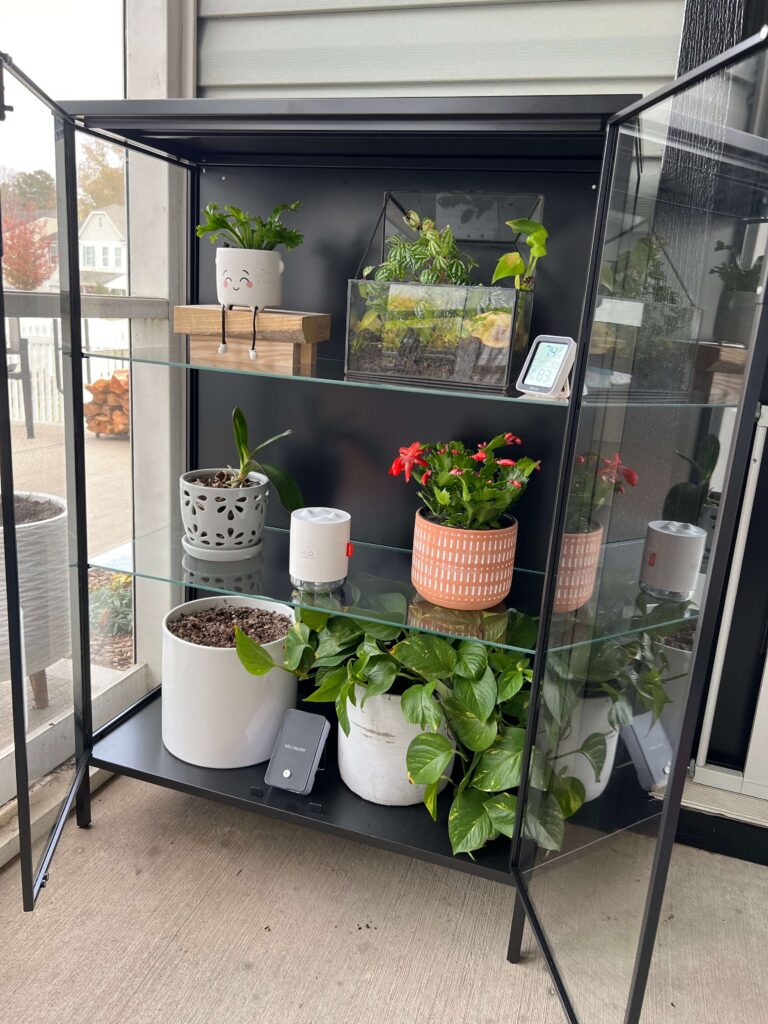
An IKEA RUDSTA greenhouse is simply an IKEA RUDSTA glass-door cabinet that has been converted into a small greenhouse for plants. The glass cabinet helps create an enclosed environment where you can better control things like temperature, humidity and lighting while also protecting your plants.
Because the RUDSTA is compact, it works especially well for anyone who doesn’t have room for a traditional greenhouse. Depending on your setup, it can be used indoors or in a protected outdoor space like we did on our patio. Plus, the black metal frame and glass doors make it look more like part of your home than a traditional greenhouse.
Imagine stepping out onto your patio and being greeted by lush, vibrant plants thriving in their very own mini-greenhouse—even when the weather outside might not be ideal. With a few simple steps and some smart planning, you can create this scene right in your home using a unique hack involving the IKEA Rudsta glass door cabinet.
If you are an IKEA Hack person like me you are also going to love this DIY IKEA SKYTTA Office Door Conversion project that saved us thousands on buying custom black metal and glass doors for our office makeover!!!!
Why You Might Need a Mini Greenhouse for Your Patio or Home?
For many people, a mini/small greenhouse is more than just a compact gardening solution; it’s a way to extend their growing season, protect delicate plants, and create a sustainable home garden even in limited space. If you’ve ever struggled to keep plants alive during colder months or found yourself limited by seasonal growing constraints, a mini greenhouse can offer the solution you’ve been looking for. Here are a few reasons why adding a mini greenhouse to your patio might be a perfect choice.
Extend Your Growing Season
One of the biggest benefits of a mini greenhouse is that it allows you to grow many types of plants outside of their typical growing seasons. With the added warmth and humidity control, you can start seeds earlier in spring and continue growing plants well into fall and even winter. This means fresh herbs, flowers, and veggies can flourish long after outdoor temperatures drop, giving you access to homegrown produce and greenery all year long.
Protection from Weather and Pests
Outdoor plants are often vulnerable to changing weather conditions—cold snaps, heavy rains, and unexpected frosts can easily damage tender seedlings or sensitive plants. By placing your plants in a controlled environment like a mini greenhouse, you can shield them from harsh weather while still allowing for light and airflow. This setup is also helpful in keeping pests, like insects or animals, away from your plants. The enclosed cabinet creates a protective barrier, reducing the risk of infestations that might otherwise damage your garden.
Ideal for Small Spaces
If you live in an apartment, condo, or home with limited outdoor space, a full-sized greenhouse may not be an option. A mini greenhouse, however, can easily fit on most patios, balconies, or even indoors near a light source. Its compact size makes it accessible to people who may not have a yard, yet it still provides all the essential benefits of a greenhouse. Plus, it’s versatile—you can use it as a plant nursery, herb garden, or even a display for exotic plants that need specific care.
Low Maintenance and Efficient
A mini greenhouse like the IKEA Rudsta requires minimal upkeep compared to larger setups. With a small heater and humidifier, it’s easy to maintain ideal growing conditions with little daily maintenance. This efficiency makes it an excellent choice for busy gardeners who want to enjoy the benefits of fresh plants without a significant time commitment.
In short, a mini greenhouse is a great way to maximize your gardening potential in a small space. It’s functional, affordable, and helps overcome many of the challenges that come with urban or small-space gardening.
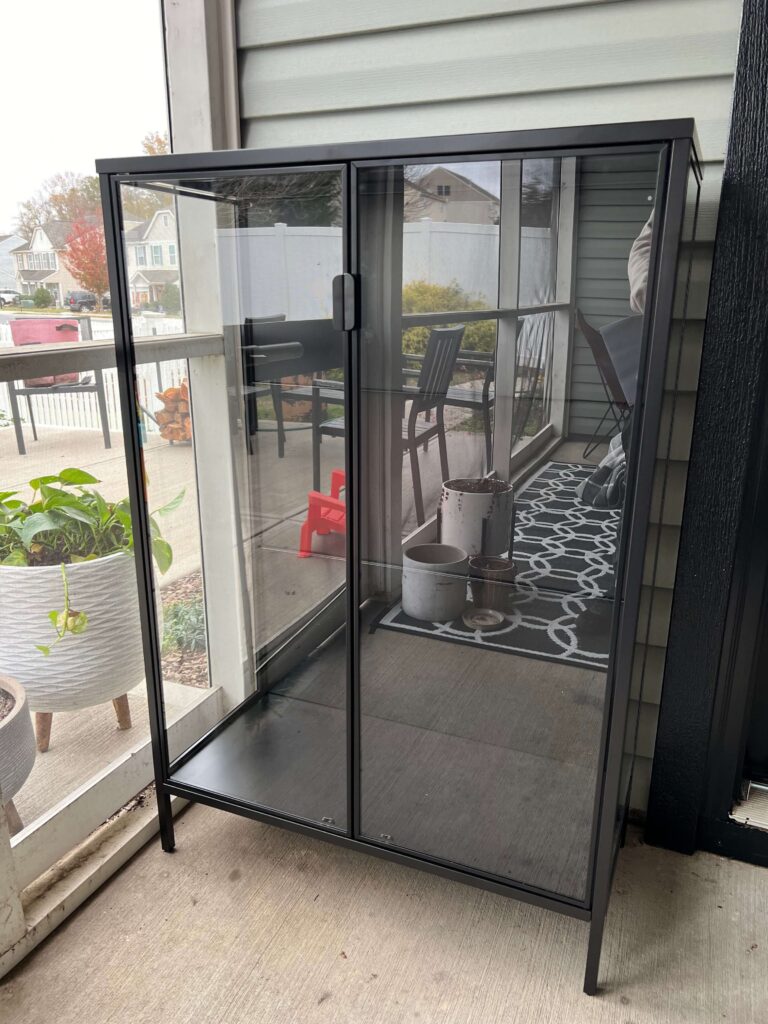

Why We Chose the IKEA RUDSTA Cabinet
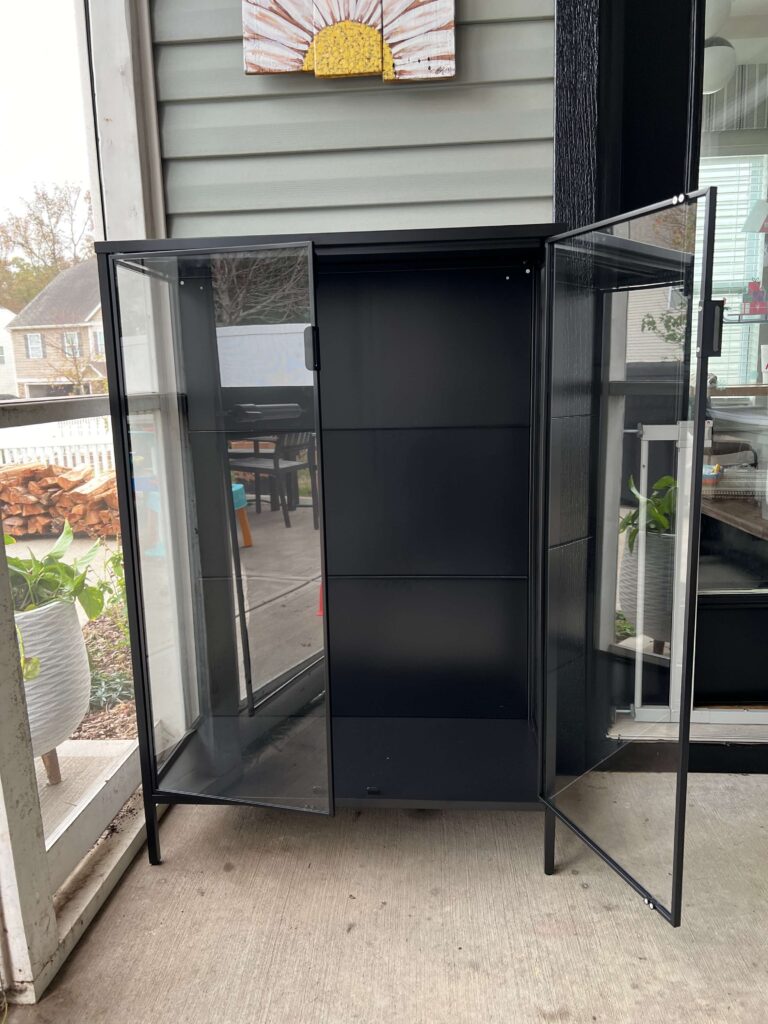
One of the biggest reasons we chose the IKEA RUDSTA cabinet for our greenhouse was honestly the way it looked! We wanted something that would function like a greenhouse without actually looking like an ugly greenhouse sitting on our patio. The clean black metal frame and glass doors look more like decor and fit the style of our home perfectly.
We bought the RUDSTA specifically for this project, and at under $200, it felt like an affordable way to create a small greenhouse without having to build a traditional one from scratch. The size also ended up fitting perfectly on our patio while still giving us plenty of room for our plants.
The glass doors allow plenty of light into the cabinet while the enclosed design gives the plants a more protected environment. The front doors also make it really easy to water plants, check on them and rearrange things when needed.
If you’re working with a smaller space, IKEA also makes a taller, more narrow RUDSTA option that’s around $150. That could be a great alternative if you want the same clean greenhouse cabinet look but don’t have room for the wider version.
What You Need for an IKEA RUDSTA Greenhouse
One of our goals with this project was to keep our IKEA RUDSTA greenhouse setup as simple as possible. We didn’t want a ton of different things plugged in or a bunch of equipment taking up valuable space inside the cabinet. We kept our setup pretty minimal and used the fan built into our small heater for air circulation instead of adding a separate fan.
Here’s what we used:
- IKEA RUDSTA glass-door cabinet — We used the wider RUDSTA cabinet for our greenhouse.
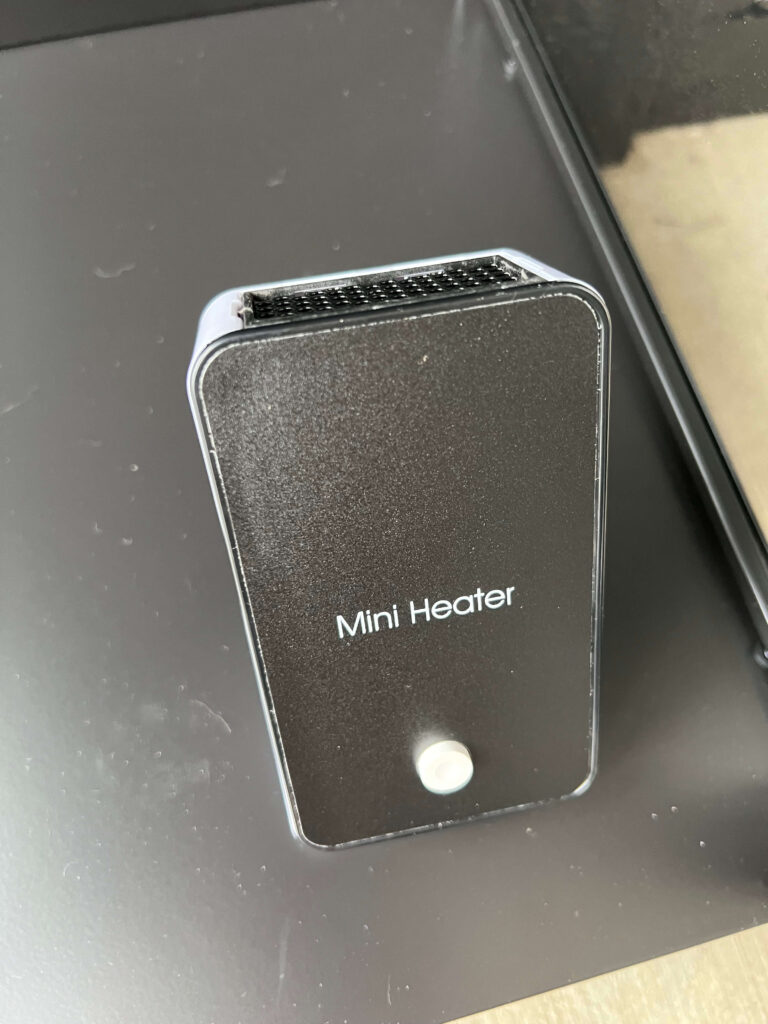
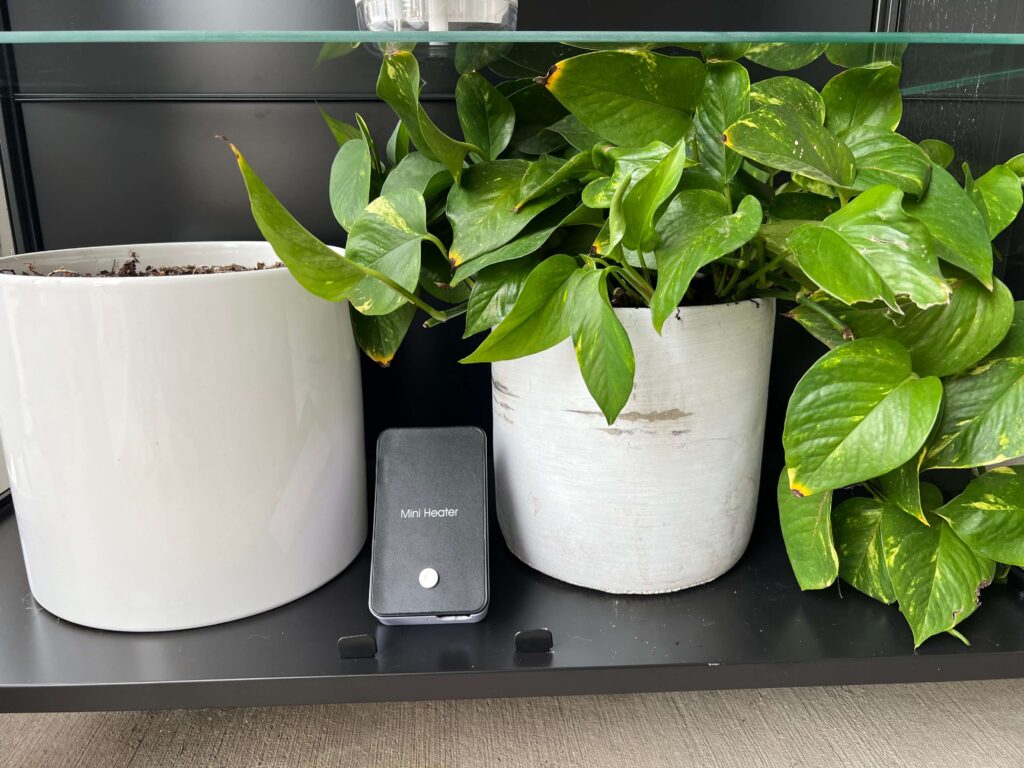
- Mini portable heater — We used the YOUCIDI Mini Portable Heater to help keep the temperature inside the cabinet warmer when outdoor temperatures dropped. The built-in fan also helped circulate air, so we didn’t add a separate fan.
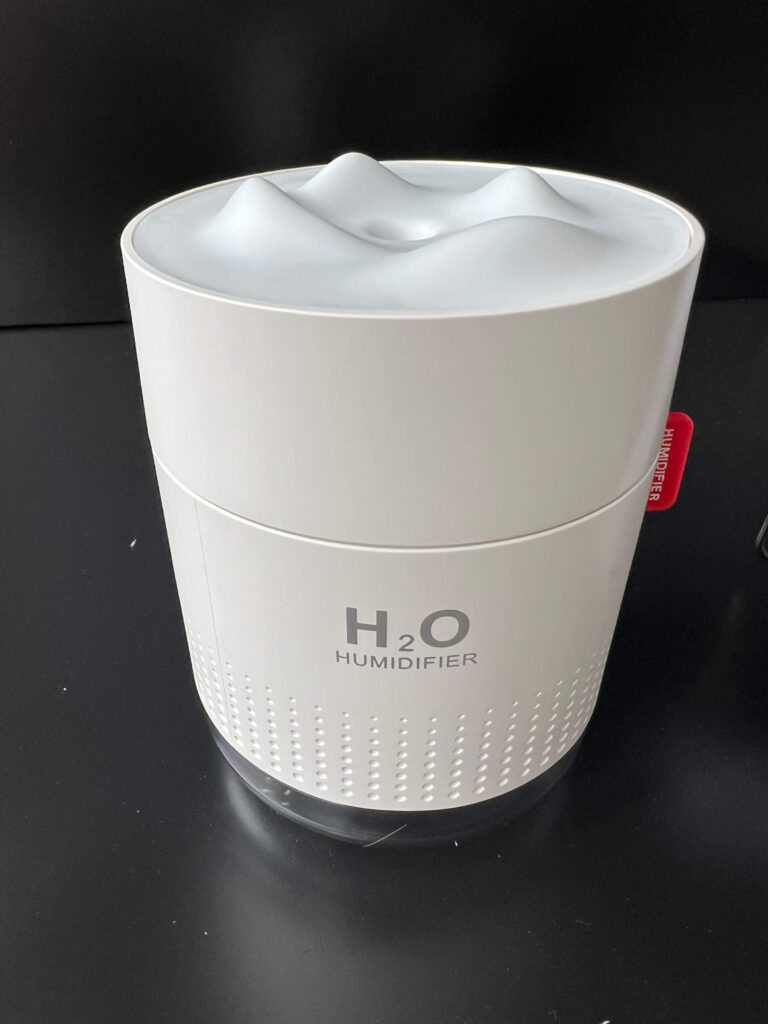
- Mini humidifier — We used the Movtip Mini Portable Humidifier to add moisture when the air inside the greenhouse became too dry.
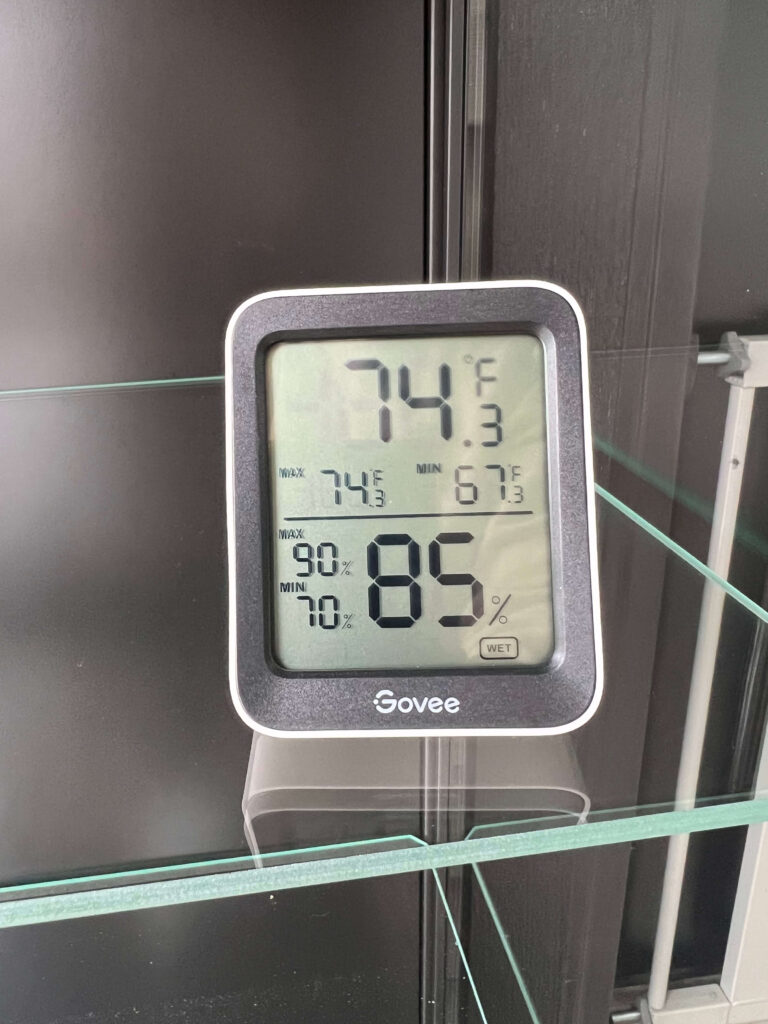
- Digital thermometer/hygrometer — This made it easy to keep an eye on both the temperature and humidity inside the cabinet.
- Full-spectrum LED grow light (Optional)
- Grow light timer — if you actually used a grow light you will need this. we used it for our heat lamp.
- Plants — Choose plants that will benefit from the more protected environment inside your greenhouse.
- Plant trays or saucers — These help catch excess water and protect the inside of the cabinet.
- Heat Light w/ Clamp – this was part of our 2 year update you can read about below.
That’s really it! We wanted this DIY greenhouse to be something that was functional without turning into an overly complicated setup. Using equipment that could serve more than one purpose—like our heater providing both warmth and air circulation—helped us keep things simple.
2-Year Update: After our first winter, we found that our original mini fan heater wasn’t enough during our coldest temperatures. See our full winter update below to learn what we changed and what heater we bought that worked much better. Heat lamp with clamp
How to Turn an IKEA RUDSTA Into a Greenhouse
Step 1: Assemble the RUDSTA Cabinet
Start by assembling the IKEA RUDSTA cabinet according to IKEA’s instructions. Before adding your plants or greenhouse equipment, decide where you want the cabinet to live so you don’t have to move it once everything is inside.
Step 2: Choose the Right Location
We placed our RUDSTA greenhouse on our patio in a protected location that receives plenty of light without being completely exposed to harsh weather. Look for a spot that is bright but protected from things like heavy rain, strong wind and extreme direct sunlight.
Step 3: Add Air Circulation
We placed our YOUCIDI Mini Portable Heater toward the bottom of the RUDSTA cabinet so the warm air could rise through the greenhouse. The fan built into our heater also helped keep air moving throughout the small space.
Because the RUDSTA is an enclosed glass cabinet, keeping some air moving is important. You’ll also want to make sure plants aren’t packed so tightly together that air can’t circulate around them. Make sure to follow the appliance’s clearance and safety instructions in the manual when setting up.
Step 4: Monitor Temperature and Humidity
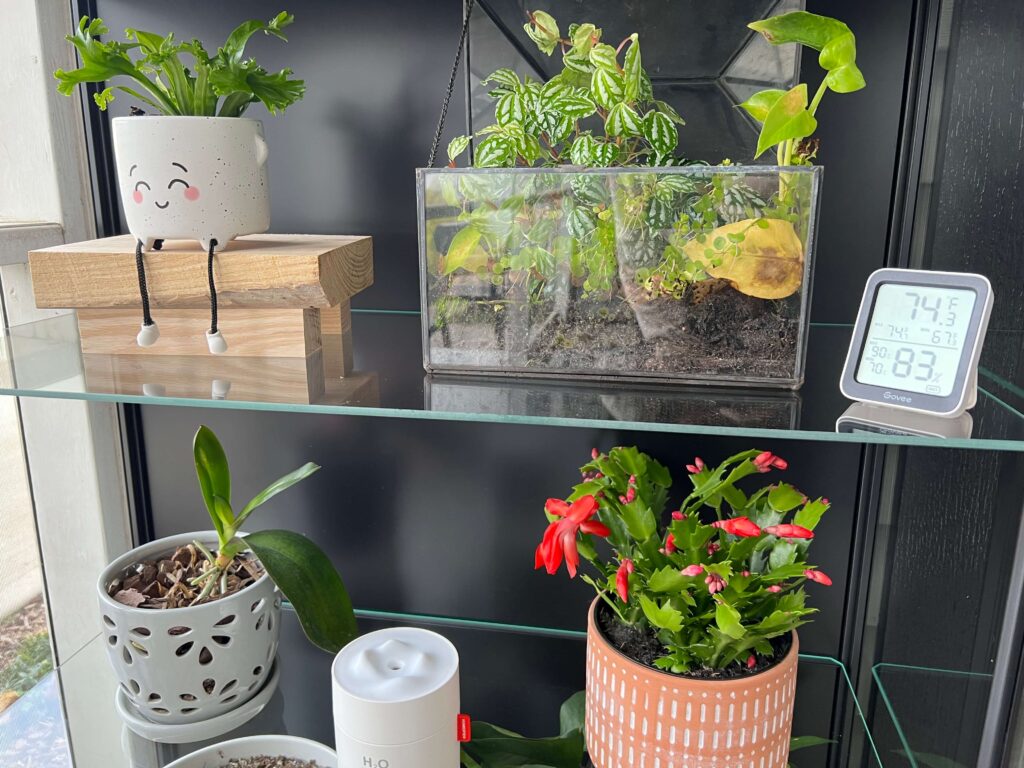
One of the most helpful additions to our greenhouse was a small digital thermometer and hygrometer. We positioned ours around eye level so we could quickly check both the temperature and humidity without opening the cabinet.
For our setup, we aimed to keep the greenhouse around 65–75°F with roughly 50–60% humidity. This gave our plants a much more stable environment during the colder months without making the inside of the cabinet excessively warm or humid. Keep in mind that the ideal temperature and humidity will depend on the types of plants you’re keeping inside, so always check the needs of your specific plants.
We also added a Movtip Mini Portable Humidifier on one of the middle shelves. Running a heater can dry out the air inside such a small space, so the humidifier allowed us to add moisture back when needed. We used the readings from our thermometer/hygrometer as our guide rather than simply running the humidifier constantly.
The goal wasn’t to create a hot, tropical greenhouse—it was to give our plants a more controlled environment and protect them from the cold winter temperatures outside.
2-Year Update: After our first winter, we found that our original mini fan heater wasn’t enough during our coldest temperatures. See our full winter update below to learn what we changed and the heater we chose.
Step 5: Add Grow Lights for Supplemental Lighting (Optional)
Depending on where you place your greenhouse or where you live, your plants may need supplemental lighting. We did not need supplemental lighting from a full-spectrum LED grow light. Consider adding one of these lights if you put your greenhouse inside or your house or if the plants aren’t getting enough light through winter on your porch.
Position your grow light so that it reaches the plants evenly. You can also put it on a timer to create a consistent day/night schedule.
Step 6: Arrange Your Plants
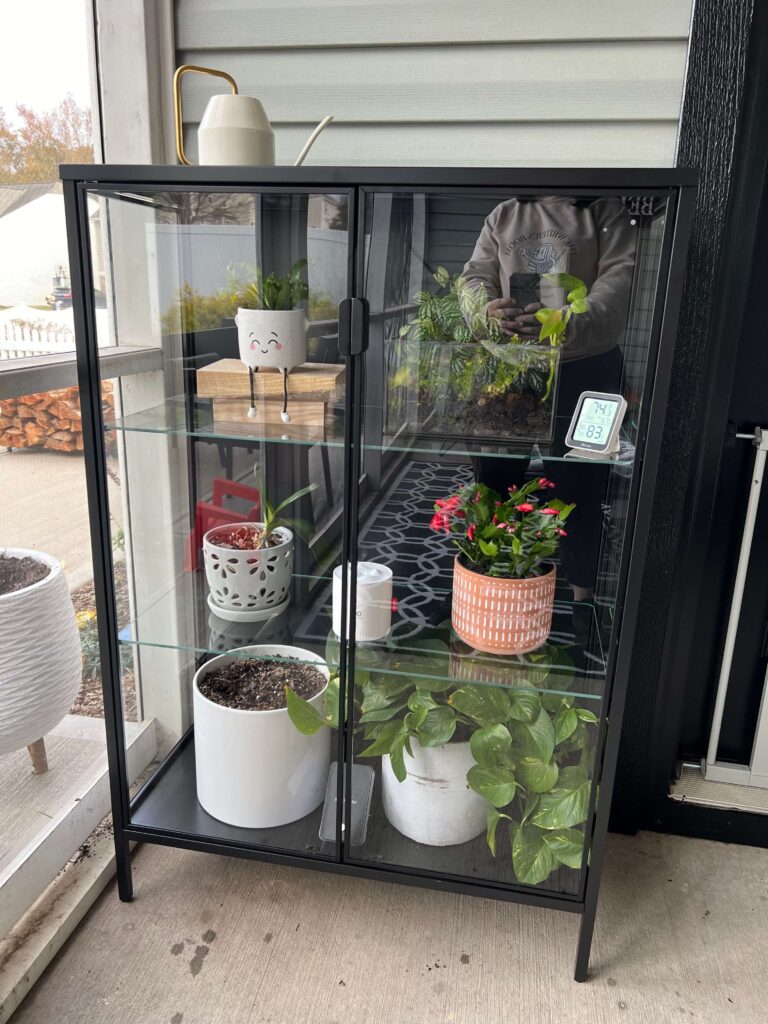
Once your equipment is in place, it’s time for the fun part—adding the plants! We placed our taller and heavier plants on the bottom shelf and kept smaller, lighter plants on the middle and upper glass shelves.
Leave enough space between plants for light and air to reach them, and don’t be afraid to add a few decorative objects to make the greenhouse feel like part of your home.
Our IKEA RUDSTA Greenhouse Setup
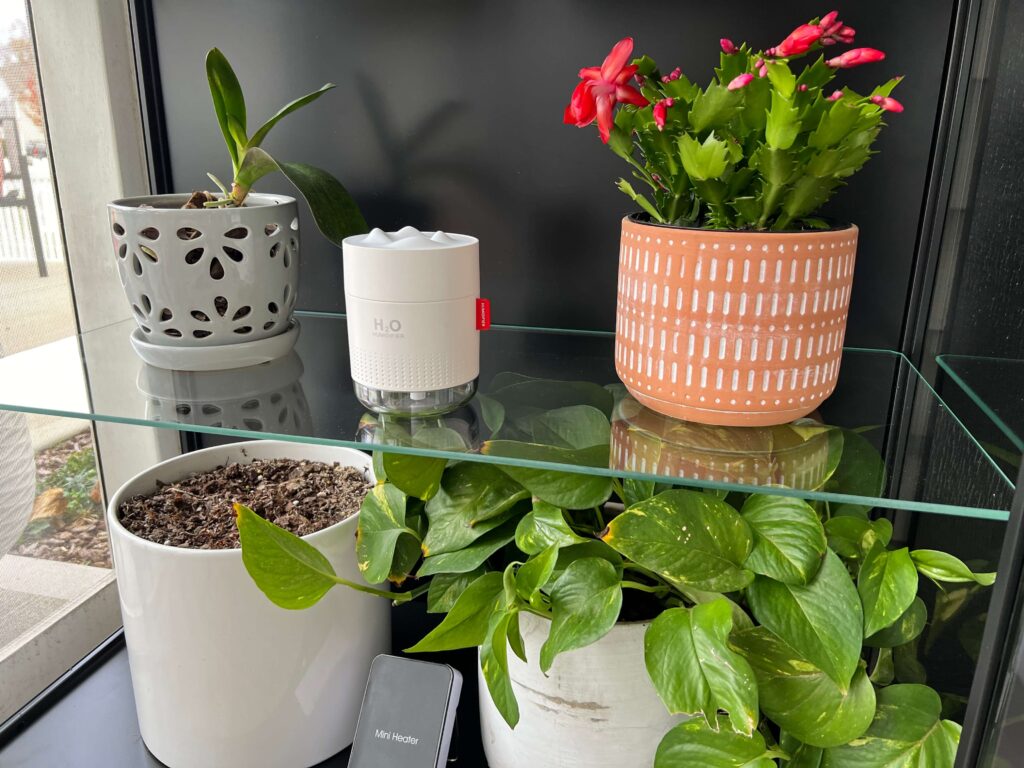
Here’s what our finished IKEA RUDSTA greenhouse looked like once everything was inside. We kept the heater toward the bottom, placed the humidifier on a middle shelf, kept our thermometer/hygrometer where it was easy to read and added supplemental lighting for days when our plants weren’t getting enough natural light.
Taller and heavier plants stayed toward the bottom, while our smaller plants filled the glass shelves above.
Our Setup at a Glance
- Location: Screened Backyard Patio
Heat: Mini portable heater
Humidity: Mini humidifier
Temperature: 65′-75’F
Humidity Range: 50-70%
Lighting: Full-spectrum LED grow light (Optional)
Plants: Christmas Cactus, Orchid, Philodendron, Aloe, Air plants and Birds Nest plant
Can You Use an IKEA RUDSTA Greenhouse Indoors?
Absolutely! While we chose to use our IKEA RUDSTA greenhouse on our patio, this setup could also make a beautiful indoor greenhouse cabinet. In fact, one of the reasons we loved the RUDSTA so much was that it looks more like a piece of home decor than a traditional greenhouse.
For indoor use, place your RUDSTA greenhouse near a source of natural light or use a full-spectrum grow light to give your plants the light they need. A digital thermometer and hygrometer can help you monitor the conditions inside the cabinet, and a small humidifier can be added if your plants need more humidity.
One advantage of keeping a RUDSTA greenhouse indoors is that you’re starting with a much more temperature-controlled environment. Depending on your home’s temperature and the plants you’re growing, you may not need a heater at all. That can make an indoor setup even simpler than the outdoor version we created.
If you use a humidifier indoors, keep an eye on condensation and moisture around the cabinet. You don’t want excess water collecting on your floors, walls or furniture. Good air circulation and monitoring the humidity level can help keep the environment comfortable for your plants without adding unnecessary moisture to your home.
The clean black frame and glass doors also make the RUDSTA especially nice for indoor use. You could place one in a sunroom, living room, home office or another bright spot and create a little plant-filled greenhouse that actually feels like part of your decor.
Can You Use an IKEA RUDSTA Greenhouse Outside?
We used our IKEA RUDSTA greenhouse on our patio, but there’s one important thing to keep in mind: the RUDSTA is designed as an indoor cabinet, not as a traditional outdoor greenhouse.
Ours was kept in a protected area on our patio rather than completely exposed to the elements. If you’re considering a similar setup, think about how much protection your space provides from rain, wind, extreme temperatures and direct sunlight before placing the cabinet outside.
For us, using the RUDSTA on our patio gave our plants a more protected environment during the colder months without requiring the space or expense of building a full-size greenhouse. Just remember that our setup was our own DIY use of an indoor cabinet outdoors, rather than its intended use from IKEA.
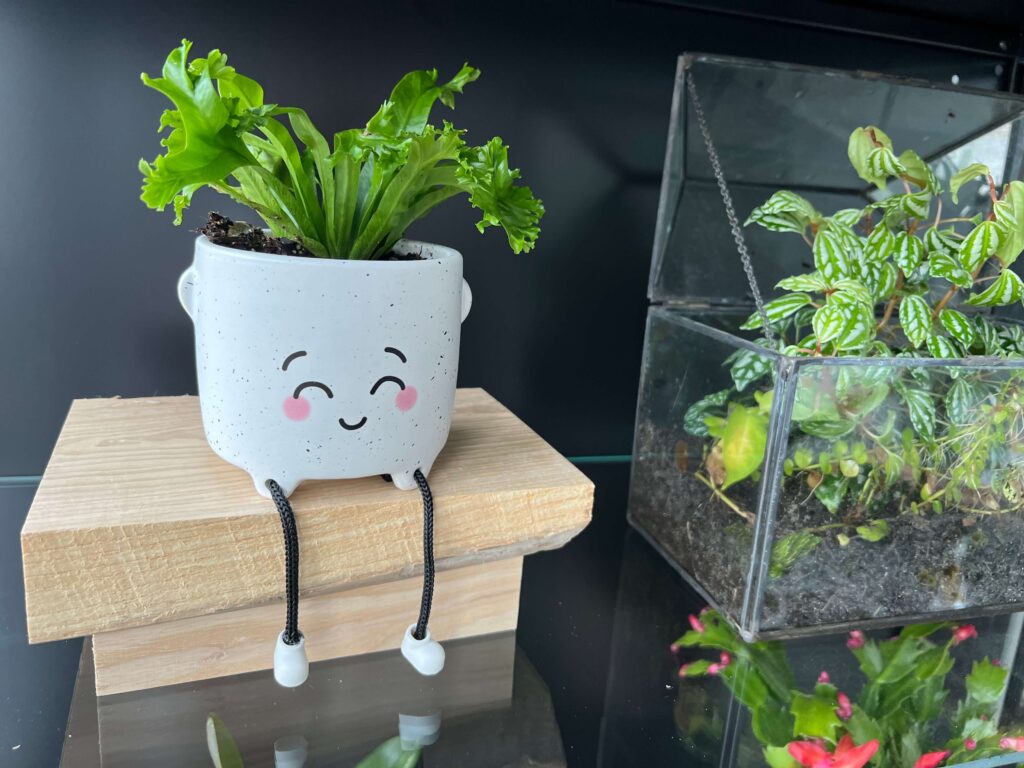
We will also have a MOST RECENT UPDATES on how our greenhouse survives winter here in South Carolina, stay tuned!
Before you go…
Creating a patio greenhouse using the IKEA Rudsta cabinet is an ideal solution for anyone who wants to grow plants but lacks the space or budget for a full-scale top indoor greenhouse. With just a few easy-to-find tools—a compact portable heater, a mini humidifier, and the IKEA Rudsta cabinet itself. You can take your patio or small outdoor area next level into a thriving dream garden plant habitat. This hack gives your various plants the right combination of warmth, moisture, and protection, creating a nurturing environment that encourages healthy growth year-round.
The biggest takeaway here is that building a mini greenhouse doesn’t require a huge investment or major construction. With a bit of creativity, the right products, and minimal setup, you can create a self-sustaining, stylish greenhouse that suits even small gardens. Whether you’re new to gardening or looking to expand your plant collection. This DIY project makes it possible to care for your plants in any season, right on your patio for a great value.
Ready to make your own DIY mini greenhouses with this affordable greenhouse kit? Start today with the IKEA Rudsta and the tools mentioned. Soon you’ll be enjoying your own mini greenhouse a thriving, beautiful green space that enhances your home. For more DIY gardening tips and smaller space solutions. Check out our other blog posts, or follow us on Instagram for regular updates on all things green and cozy!
Create a mini greenhouse with this IKEA hack! For more outdoor ideas, set up a DIY Backyard Splash Pad. Or capture garden moments with our Best Bird Feeder Camera recommendations.
If or when you do make your own DIY Greenhouse. I’d love for you to follow us and tag us on Instagram so I can see your really DIY projects finished results! Happy crafting!
Our IKEA RUDSTA Greenhouse Winter Update: 2 Years Later
UPDATE: We’ve now used our IKEA RUDSTA greenhouse through two full South Carolina winters, so I can finally share how this little DIY greenhouse actually held up long-term—and what we changed along the way!
Overall, this project has been a huge success. We used the greenhouse throughout the entire winter both years, and most of our plants survived, including our Christmas cactus, philodendron, aloe and bird’s nest plant.
The two plants we didn’t have as much success with were our orchid and air plants. I believe these needed more humidity than the other plants in our greenhouse, and knowing what I know now, I would pay closer attention to the individual humidity needs of plants like these rather than trying to keep the entire greenhouse at one humidity level.
What We Changed After Our First Winter
The biggest change we made was our heat source.
Originally, we used a small fan heater to warm the greenhouse while also providing air circulation. Once the temperatures really started dropping, however, we realized the small heater wasn’t producing enough heat to keep the greenhouse as warm as we wanted.
We ended up adding a supplemental heat light, and our plants minus the Orchid started doing much better. We lost the Orchid unfortunately, it just couldn’t recover. Once outdoor temperatures dropped for the season, we kept our heat source running mostly at night to help maintain a more stable environment inside the cabinet. We used a timer that allowed it to run for 8 hours and shut off. The really cold days we would run the heat longer.
We didn’t completely stop using the original fan heater, though! Instead, we turned it on about once a week to circulate the air inside the greenhouse. This allowed us to get the extra warmth we needed from our new heat source while still using the fan to periodically move air around the cabinet.
Our Greenhouse Made It Through 9°F and Snow!
One of the biggest tests came when our outdoor temperature dropped to around 9°F and we received approximately 12 inches of snow. Even with such unusually cold winter weather, our protected RUDSTA greenhouse setup made it through.
This is also why it’s important to remember that our cabinet sits in a protected area on our patio. The IKEA RUDSTA isn’t designed to be an outdoor greenhouse, so our experience shouldn’t be taken to mean the cabinet can simply be placed outside completely exposed to snow, rain and other weather.
Did We Really Need the Humidifier?
This was probably my biggest surprise after using the greenhouse for two winters: I barely used the humidifier!
Initially, I thought maintaining humidity was going to require much more work. In reality, regularly watering the plants when they needed it seemed to add enough moisture to the enclosed environment naturally. I only turned on our small humidifier when the hygrometer showed that the humidity had dropped too low.
We also never had problems with condensation, mold or mildew inside the cabinet.
If I were setting this greenhouse up again, I wouldn’t worry nearly as much about constantly running a humidifier. I would still keep a hygrometer inside so I could monitor the humidity and have a small humidifier available if needed, but I would let the actual readings—and the needs of the plants—tell me when to use it.
Would We Build an IKEA RUDSTA Greenhouse Again?
In a heartbeat!
After two winters, this is still one of those DIY projects that has worked incredibly well for us. It’s compact, looks beautiful on our patio and has allowed us to overwinter plants without adding a large traditional greenhouse to our yard.
In fact, I’m considering adding another RUDSTA greenhouse next spring specifically for starting herbs!
If I were doing the project again, the biggest thing I would change would be the heating setup. Our original small fan heater was great for occasional air circulation, but it wasn’t enough on its own once our winter temperatures really dropped. I’d also worry much less about maintaining constant humidity and instead monitor the hygrometer and add humidity only when the plants actually need it.
After two winters of trial and error, we’ve learned that this setup doesn’t need to be overly complicated. Keeping the plants warm enough, monitoring their individual needs and watering them regularly ended up being the most important parts of making our little IKEA greenhouse work.
IKEA RUDSTA Greenhouse FAQs
We found the IKEA RUDSTA to be a great option for creating a compact greenhouse because the glass cabinet gives plants an enclosed, protected space without taking up the room of a traditional greenhouse. The glass doors also make plants easy to access while allowing you to see everything inside.
It depends on where you place it. If your RUDSTA greenhouse doesn’t receive enough natural light—especially during shorter winter days—a full-spectrum LED grow light can provide supplemental lighting. We added one to our setup for this reason.
Yes, I do think the fan in the heater was helpful in keeping air circulating since we kept the cabinet closed all winter to maintain heat.
We monitored humidity with a digital thermometer/hygrometer and used a small humidifier when the cabinet became too dry. This was especially helpful when the heater was running and reducing moisture inside the cabinet.
yes, it can but…RUDSTA wasn’t designed as a purpose-built outdoor greenhouse, so I think location/protection matters. If it sits outside uncovered I could see rust becoming a problem. We have had ours two years under a covered porch and no rust currently.
I really think you can grow just about any plant in this greenhouse setup. just keep in mind that some plants need more humidity, temp and light. so getting plants that all have a similar range would be your best option at them all doing well.
COZY HOME, COZY RECIPES:
Every cozy home deserves amazing recipes, and it’s even better when those recipes are both delicious and healthy. Our goal is to provide tasty meals that are easy to make, regardless of your skill level.
Fast, easy meals leave more time for fun activities, making your home a hub of joy and good food.
CONNECT WITH US:
As always, we love hearing about your experiences with our “DIY Mini Indoor Greenhouse: Easy IKEA Rudsta Hack”. Reach out to us through our social channels. Any questions you have, we’re here to answer.
Stay updated by joining our newsletter, offering a monthly dose of new recipes and a first look at upcoming projects.
MORE COZY KITCHEN RECIPES:
If you’re hungry for more, explore our collection of Cozy Kitchen Recipes. Another healthy favorite is the “Sausage Potato Veggie Bake.” Find these recipes and more here.
DIY RESOURCES:
For additional resources, check out our DIY Tutorials, offering a wealth of information to enhance your home improvement skills.

